A Partner to Industry
For over half a century, Berkeley EECS has been at the forefront of research that has led to important advancements in semiconductor and MEMS devices, design technology, computer architecture, operating systems and databases, and wired and wireless networking. Berkeley graduates are at the core of today’s Information Technology industry.

Corporate Access
The EECS Department recognizes institutions which give to the department annually with first tier access to our graduating students.

External Advisory Board
The EAB was established to help the department fulfill its mission of educating leaders, creating knowledge, and serving society.

Innovation and Leadership
From Business Insider power rankings to prizes for innovation, Berkeley EECS is a fountainhead of creative people and ideas.
BEARS 2023
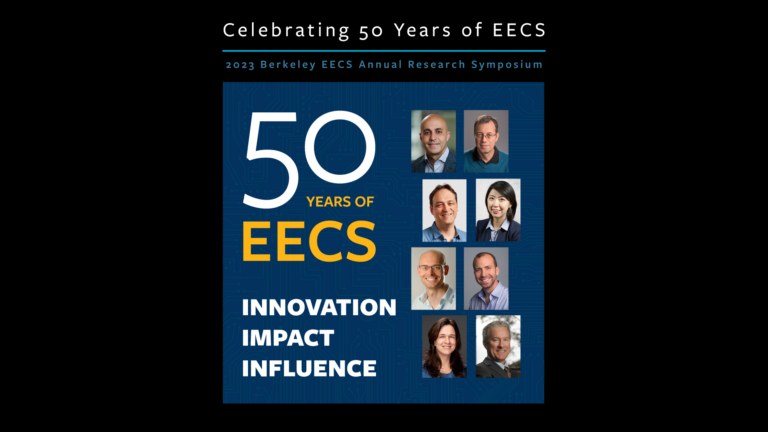
The Berkeley EECS Annual Research Symposium is an opportunity for everyone in the wider UC Berkeley Electrical Engineering and Computer Sciences community to come together to hear about some of our latest research and celebrate the year’s Distinguished Alumni. This year’s lectures celebrated the department’s 50th anniversary. The program highlighted the wide-reaching impact of EE+CS at Berkeley in academia and industry over the past five decades.
EECS Joint Colloquium
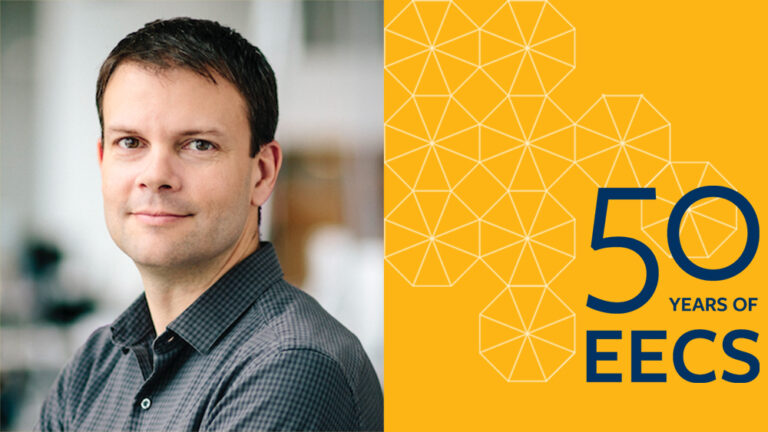
The weekly EECS Colloquium offers our faculty a chance to invite speakers offering a wide range of experiences covering topics in both Electrical Engineering and Computer Science to engage with the department.
Entrepreneurial Spirit
Berkeley EECS faculty and alumni have founded over 118 startups. These have resulted in 11 successful IPOs. The resulting companies now have over $195.35B in Market Capitalization. According to PitchBook’s Venture Capital Monthly, UC Berkeley is the #2 university for VC-backed undergraduate entrepreneurs and companies in their 2017-2018 edition.
The University of California is also ranked first in the world among universities granted U.S. utility patents in 2015.